The ultimate exposé on printer ink pricing. Learn why manufacturers charge outrageous prices for ink, how the business model actually works, and discover 12 actionable strategies to slash your printing costs by up to 70% without sacrificing quality.
Why Is Printer Ink So Expensive? The Shocking Truth (+ How to Save $500/Year)
You bought a printer for $60. Great deal, right?
Then you go to buy replacement ink and discover the cartridges cost $75.
Wait... the INK costs more than the entire PRINTER?
You check the price again thinking it must be a mistake. Nope. A tiny plastic cartridge containing maybe an ounce of colored liquid actually costs more than the sophisticated electro-mechanical device sitting on your desk.
This isn't just annoying—it's economically absurd. And you're not imagining things. According to Consumer Reports, printer ink costs between $13 to $75 per ounce. Do the math and that's $1,664 to $9,600 per gallon.
Let that sink in: printer ink is more expensive per gallon than Dom Pérignon champagne, Chanel No. 5 perfume, and human blood.
"Why is printer ink so expensive?" is one of the most-searched consumer questions on Google, and for good reason. Americans spend over $20 billion annually on printer ink, with the average household dropping $100-300 per year on cartridges.
I've spent 12 years in the printing industry analyzing costs, business models, and consumer behavior. What I've learned will shock you—and more importantly, save you hundreds of dollars.
This isn't about conspiracy theories. It's about understanding a brilliantly cynical business model that legally separates you from your money, and then learning how to beat it at its own game.
The Shocking Math: What You're Really Paying For
Let's start with the numbers that make absolutely no sense:
- Printer Ink vs. Luxury Goods (Price per Gallon)
- Printer Ink: $1,664 - $9,600 per gallon
- Premium Vodka (Grey Goose): $300 per gallon
- Chanel No. 5 Perfume: $3,000 per gallon
- Human Blood: $1,500 per gallon (medical market price)
- Crude Oil: $120 per gallon
- Champagne (Dom Pérignon): $1,000 per gallon
- Winner of "Most Expensive Liquid You'll Ever Buy": Printer Ink
The Average Cartridge Breakdown
A typical ink cartridge contains:
- Ink volume: 5-12ml (0.17-0.4 ounces)
- Actual ink cost to manufacture: $0.23-$0.50
- Retail price: $15-$35
- Your markup: 3,000% to 10,000%
If McDonald's used this pricing model, a Big Mac would cost $90.
Real-World Cost Examples
HP 61 Black Ink Cartridge:
- Ink volume: 3ml
- Retail price: $21.99
- Cost per gallon equivalent: $27,826
- That's more expensive than liquid gold
Canon PG-245XL Black:
- Ink volume: 12ml
- Retail price: $32.99
- Cost per gallon equivalent: $10,383
Epson 288XL Cyan:
- Ink volume: 5.5ml
- Retail price: $19.99
- Cost per gallon equivalent: $13,734
You're not just paying premium prices. You're paying prices that make luxury goods look like clearance bin items.
So why? How did we get here? And more importantly, how do you escape this trap?
The Real Reasons Printer Ink Is Outrageously Expensive
Reason 1: The Razor-and-Blades Business Model (You're the Target)
This is the foundation of everything. HP, Canon, Epson, and Brother didn't stumble into this pricing by accident. It's the entire business strategy.
How it works:
- Sell printers at or below cost (loss leader)
- Make ALL profit from ink sales over the printer's lifetime
- Lock customers into buying only compatible cartridges
- Profit massively for years
The numbers tell the story:
A typical $60 inkjet printer:
- Manufacturing cost: $50-70 (printer sold at break-even or loss)
- Retailer margin: $5-10
- Company profit on printer: $0 to -$20 (LOSS)
The same customer over 3 years buying ink:
- Average 6-8 cartridge sets: $300-600
- Manufacturing cost of all ink: $15-30
- Company profit on ink: $270-570 (MASSIVE PROFIT)
Total profit from one customer over 3 years: $250-550
This is exactly how Gillette pioneered the model with razors (cheap handles, expensive blades) and it's now standard across industries:
- Gaming consoles (cheap console, expensive games)
- Coffee makers (cheap machine, expensive pods)
- Printers (cheap printer, expensive ink)
The genius (from their perspective): Once you buy the printer, you're locked in. You're not going to throw away a $60 printer just because ink is expensive. So you keep buying their cartridges.
Reason 2: Proprietary Technology & Chip Protection
Printer manufacturers don't just make it expensive—they make it impossible to use anything else.
How they lock you in:
Microchip Authentication:
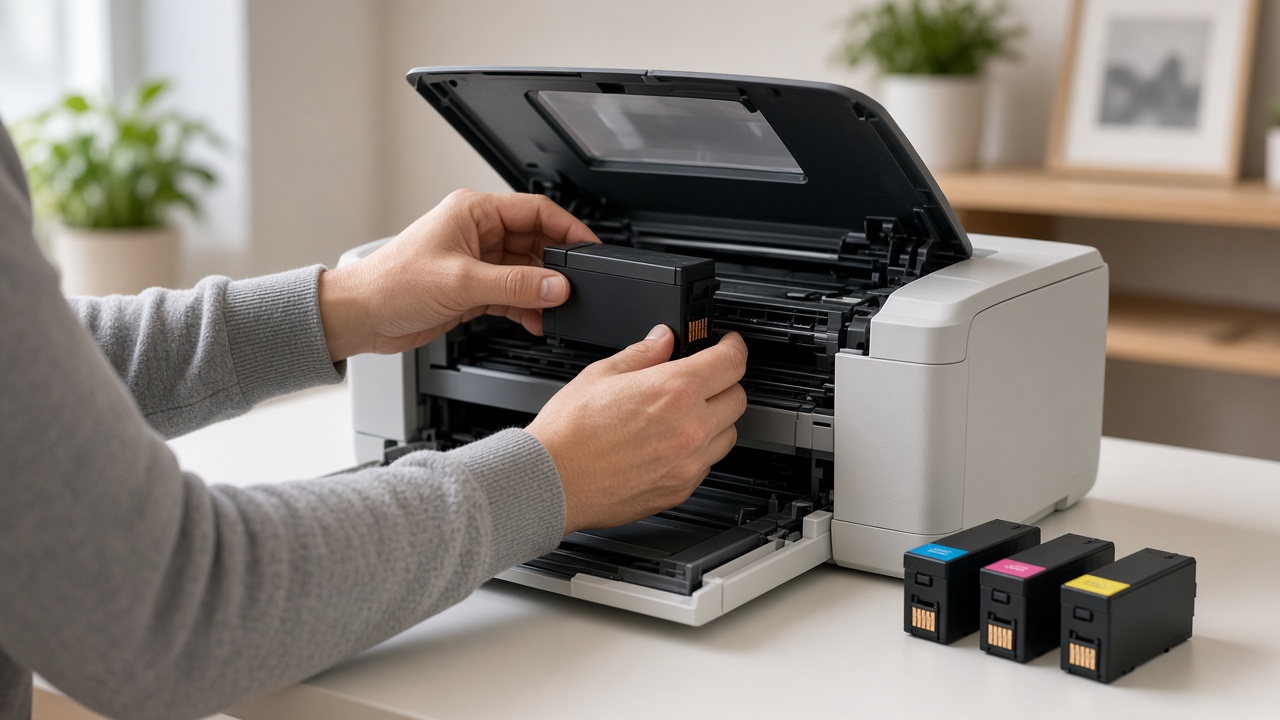
- Every cartridge has a proprietary chip
- Printer won't function without recognizing the chip
- Chip tracks ink levels, cartridge age, and usage
- Designed to reject third-party cartridges
Physical Design Patents:
- Unique cartridge shapes per printer model
- Proprietary connection mechanisms
- Specific color formulations
- All legally protected
Firmware Updates:
- Manufacturers push "security updates"
- Real purpose: Block third-party cartridges that worked yesterday
- HP got sued over this in 2016 for remotely disabling compatible cartridges
- They settled but continue the practice
Region Coding:
- Cartridges from other countries won't work
- Prevents importing cheaper international ink
- Traps you in higher-priced markets
The result: You can't just buy "ink." You must buy their ink, at their price, on their terms.
Reason 3: Research & Development (Costs Are Real, But...)
Manufacturers defend high prices by pointing to R&D costs. And they're partially right—developing printer ink IS complex.
What actually goes into ink development:
Ink Chemistry:
- Must dry instantly without smudging
- Can't clog microscopic nozzles (50 microns = thinner than human hair)
- Must produce accurate colors that last decades
- Has to work across temperature ranges
- Needs to resist fading from UV light
Engineering Requirements:
- Color consistency across batches
- Particle size uniformity
- Chemical stability during storage
- Compatibility with different paper types
- Meets environmental regulations
Quality Control:
- Testing for every printer model
- Color calibration standards
- Longevity testing
- Safety certifications
Legitimate R&D costs: $50-100 million annually per company
BUT HERE'S THE CATCH:
These R&D costs are amortized across billions of cartridges sold. The actual R&D cost per cartridge is approximately $0.02-$0.05.
So yes, R&D is expensive. But it doesn't justify a $35 retail price on a cartridge that costs $2 to manufacture and $0.05 in R&D.
The R&D argument is like a restaurant charging $100 for a burger because "developing recipes is expensive."
Reason 4: Manufacturing & Materials (Cheaper Than You Think)
Manufacturers also claim high production costs.
Let's break down
what's actually in a cartridge:
Component costs:
Physical materials:
- Plastic housing: $0.15-$0.30
- Sponge/foam: $0.05-$0.10
- Microchip: $0.20-$0.50
- Label/packaging: $0.10
Ink itself:
- Raw materials: $0.10-$0.30 per cartridge
- Purification & filtration: $0.05
- Color additives: $0.03-$0.08
Manufacturing process:
-
Assembly (automated): $0.20-$0.40
-
Quality testing: $0.10
-
Packaging: $0.15
-
Total manufacturing cost: $1.50-$2.50 per cartridge
-
Retail price: $15-$40 per cartridge
-
Markup: 600%-2,600%
For comparison:
- Luxury cars: 15-20% markup
- Designer clothing: 200-400% markup
- Pharmaceuticals: 300-500% markup (often criticized)
- Printer ink: 600-2,600% markup ✓ Winner
Reason 5: Planned Obsolescence & Artificial Scarcity
Manufacturers don't just charge high prices—they ensure you use more ink than necessary.
How they make you waste ink:
1. Printhead Cleaning Cycles
- Printer automatically runs cleaning cycles
- Uses 10-30% of your ink supply
- Happens even if you never print
- More frequent with cheaper printers
A study found: Users of budget inkjets waste 30-40% of their ink on cleaning cycles alone.
2. "Empty" Cartridges That Aren't Empty
- Cartridges report "empty" at 20-40% remaining ink
- Engineered safety margin prevents printhead damage
- But you're forced to replace cartridges with ink still inside
- That "empty" cartridge has $3-$8 worth of ink left
3. Expiration Dates
- Cartridges have expiration dates (typically 18-24 months)
- Printer may reject "expired" cartridges even if sealed
- Forces you to buy new cartridges before old ones run out
4. Startup Ink Waste
- New printer uses 20-60% of included "starter" cartridges just to initialize
- This forces you to buy replacement cartridges within weeks
- Starter cartridges often contain 50% less ink than standard
5. All Colors Required
- Printer won't print black text if cyan is empty
- Makes zero technical sense (black doesn't need cyan)
- Forces purchase of all color cartridges even if you only print B&W
Frequently asked questions
Why does printer ink cost more per gallon than champagne?+
Printer ink costs $1,664-$9,600 per gallon because manufacturers use a "razor-and-blades" business model—selling printers at cost or loss, then profiting from expensive replacement cartridges. Manufacturing cost is only $1.50-$2.50 per cartridge, but retail prices are $15-$40 (600-2,600% markup). They protect this model with proprietary chips, patents, and firmware updates that block cheaper alternatives.
What is the cheapest way to print if I print frequently?+
Buy a tank printer (Epson EcoTank, HP Smart Tank, or Canon MegaTank). Initial cost is $200-$350, but ink bottles cost only $10-$30/year vs. $150-$250/year for cartridges. You'll break even in 6-12 months and save $400-$600 over 3 years. For black-and-white only, a laser printer at $120-$190 offers cost-per-page as low as $0.02-$0.05.
Are third-party ink cartridges worth it or will they damage my printer?+
Quality third-party cartridges from reputable brands (LD Products, E-Z Ink, Valuetoner) save 40-60% without damaging printers. Manufacturing quality has improved significantly. However, some printers use firmware updates to block third-party cartridges, and using them may technically void warranty (rarely enforced). Start with one cartridge to test compatibility before buying bulk.
How much money can I actually save with a tank printer?+
Tank printers save $150-$400 annually depending on usage. Example: Standard inkjet costs $200/year in cartridges for 2,000 pages. Tank printer costs $20/year in ink bottles for same pages—saving $180 annually. Over 3 years: $540 savings minus $150 higher upfront cost = $390 net savings. Heavy users (500+ pages/month) save even more.
Why do printers waste so much ink on cleaning cycles?+
Inkjet printers automatically run cleaning cycles to prevent printhead clogs from dried ink. Budget printers waste 30-40% of ink on cleaning. This is intentional design—cheaper printers have smaller, more prone-to-clog printheads requiring frequent cleaning. This forces you to buy more ink. Laser printers don't have this issue since toner doesn't dry out.
Can I use my printer after the ink cartridge says it's empty?+
Usually yes, but with limitations. Cartridges report "empty" at 20-40% remaining ink as a safety margin to prevent printhead damage. Some printers allow you to override the warning and continue printing until truly empty. Others block printing entirely. This wastes $3-$8 of ink per cartridge. Third-party "chip resetters" can bypass this on some models.