A printer that will not join Wi-Fi is usually on the wrong band, on a guest network, or still holding an old password. The phone working does not prove the printer can use the same network.
Connect in this order.
Confirm the network the printer is allowed to use
- Use your main Wi-Fi, not a guest or “IoT” network that blocks device-to-device traffic. Guest mode lets the printer reach the internet and still stay invisible to your PC.
- Prefer 2.4 GHz. A large share of home printers do not support 5 GHz.
- If the router combines both bands under one name, split them during setup (for example a name ending in 2.4) or temporarily disable band steering.
- The password is the Wi-Fi password, not the printer’s admin PIN.
Stand the printer near the router for the first connection. You can move it after a test page works.
Put the printer on the network again
- On the printer, open the wireless setup menu and choose your 2.4 GHz network.
- If it already lists an old network, forget that network first so it does not keep the previous password.
- Enter the password carefully. Trailing spaces fail with no useful error on some panels.
- Wait until the wireless light is steady or the panel says Connected.
- Print a network configuration page from the printer menu and note the IP address.
Restart order if it will not associate: unplug the router for 60 seconds, power it on, wait until Wi-Fi is up, then power-cycle the printer and run wireless setup again.
Add it in Windows after it has an IP
- Settings → Bluetooth & devices → Printers & scanners → Add device.
- If Windows does not list it, choose Add manually and use the IP from the configuration page.
- Open the printer properties and set the port to Standard TCP/IP at that IP. WSD ports are what make a printer look connected and then vanish.
- Print a test page.
On Mac, remove the old queue in System Settings → Printers & Scanners and add the printer again once the panel shows Connected.
If it drops off every few hours
- Reserve the printer’s IP in the router so it does not change after a reboot.
- Turn off “AP isolation” or guest isolation for the network the printer uses.
- Update printer firmware only from the brand’s own menu or site, after the connection is stable.
- Keep the printer off a Wi-Fi extender that renames the network unless you intentionally joined that extender’s name.
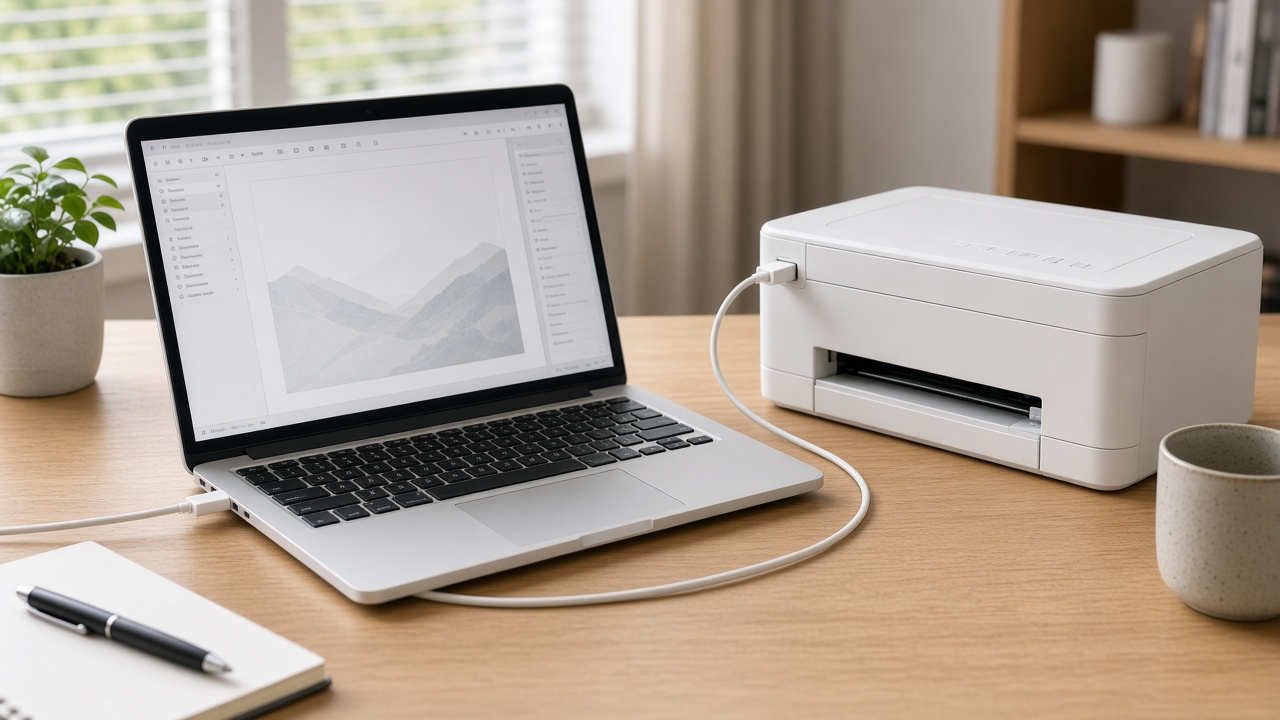
USB is a valid fallback while you sort Wi-Fi out. A cable does not fix the wireless setup, but it lets you print today.
What not to do
- Do not run a third-party “Wi-Fi repair” download.
- Do not factory-reset as the first click. Forget the network and rejoin 2.4 GHz first.
If the configuration page shows an IP and Windows still cannot add that port, call +1 888 759 4448. The printer is on the network; the PC queue is what still needs to be built.
Frequently asked questions
Why can my phone use Wi-Fi but the printer cannot?+
Phones use 5 GHz and 2.4 GHz. Many printers only support 2.4 GHz. If the router uses one combined name, the printer may fail while the phone connects. Give the printer the 2.4 GHz network, or split the bands so 2.4 GHz has its own name.
The printer connects, then goes offline later. Why?+
Band steering, a guest network that isolates devices, or a new router IP are the usual causes. Reserve a DHCP address for the printer and keep it off guest Wi-Fi. In Windows, use a Standard TCP/IP port instead of WSD.
Should I reset the printer to factory settings?+
Only after a normal reconnect fails. A reset erases the saved Wi-Fi name and password. Reconnect to 2.4 GHz immediately after, then add the printer again in Windows.
Does the printer need to be close to the router?+
For setup, yes. Move it into the same room as the router until it joins, then test from its normal spot. Weak 2.4 GHz signal shows up as a printer that connects once and drops.
Can you set up Wi-Fi remotely?+
Someone at the printer still has to press the wireless button or enter the password on the panel. Remote support can fix the Windows port and queue once the printer is actually on the network.