A comprehensive, relatable guide to solving the most frustrating printer problems. Learn why printers malfunction and get step-by-step solutions that actually work, written by someone who's fixed thousands of printers.
Why Your Printer Hates You (And How to Finally Fix It)
Let's be honest: printers are the most passive-aggressive devices ever invented. They work perfectly fine when you're printing a random meme at 2 AM, but the moment you need to print something important for a meeting in 10 minutes, they suddenly develop a personality disorder.
If you've ever screamed at a printer, thrown your hands up in defeat, or seriously considered going back to handwritten notes, you're not alone. Printers have been tormenting humans since the 1980s, and they've only gotten more creative with their torture methods.
But here's the good news: most printer problems have simple solutions once you understand what's actually going wrong. After fixing thousands of printers, I've learned that these machines aren't possessed by demons (probably). They're just incredibly temperamental and poorly designed for human interaction.
The 15 Most Infuriating Printer Problems (And How to Actually Fix Them)
1. "Printer Offline" (When It's Clearly Right There)
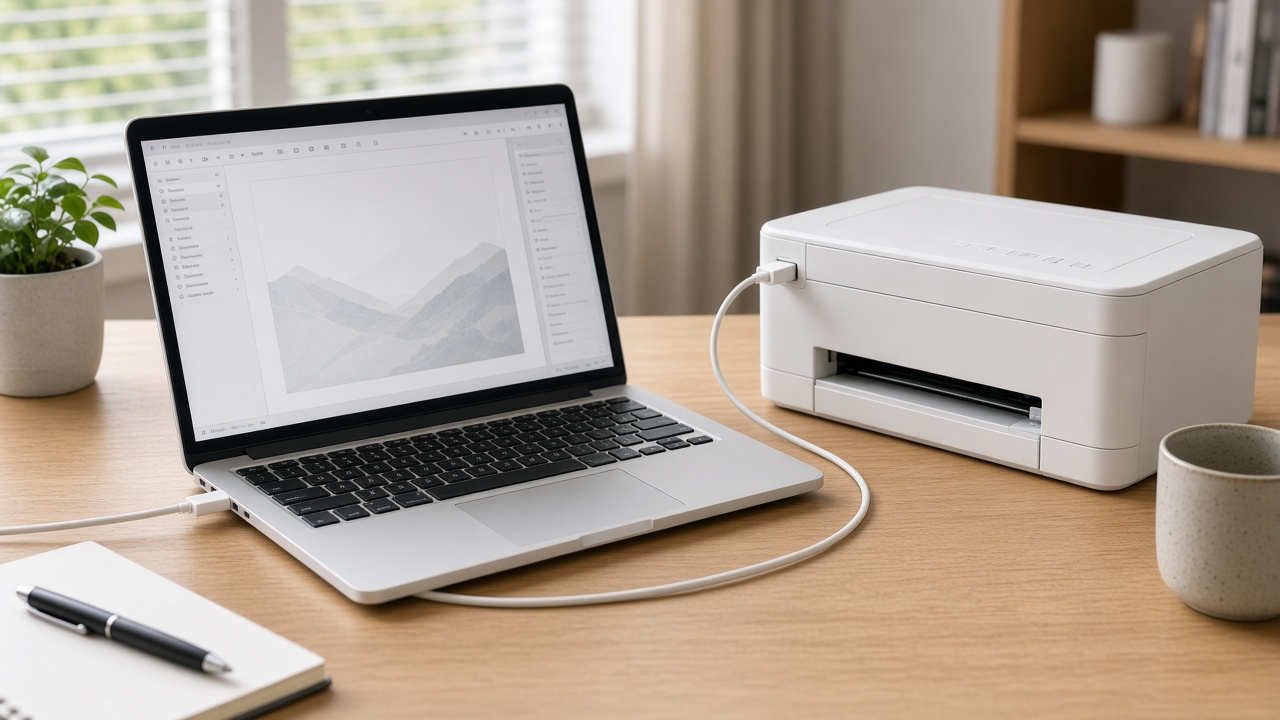
This is the digital equivalent of someone ignoring you while making eye contact. Your printer is physically connected, powered on, and sitting two feet away from you, yet your computer insists it's "offline."
Why it happens: Your computer and printer had a communication breakdown, usually because the printer went to sleep, the IP address changed, or Windows decided to be helpful by switching to "Use Printer Offline" mode.
The real fix:
- Go to Settings → Devices → Printers & Scanners
- Click your printer, then "Open queue"
- Click "Printer" in the menu bar and uncheck "Use Printer Offline"
- Still not working? Remove the printer completely and re-add it
- For network printers, assign a static IP address in your router settings so this stops happening every week
2. The Phantom Paper Jam
You've cleared the paper jam. You've checked every possible compartment. You've performed an exorcism. Yet the printer still insists there's a paper jam.
Why it happens: Tiny pieces of torn paper are stuck in the sensors, or the sensors themselves are dirty or broken.
The real fix:
- Open every single door and panel on your printer
- Use a flashlight and look for tiny paper fragments near the rollers
- Clean the sensors (small plastic tabs) with a lint-free cloth slightly dampened with water
- Manually rotate the roller wheels to check for obstructions
- Check the rear access door (most people forget this exists)
3. "Low Ink" When You Just Replaced the Cartridge
Nothing says "corporate scam" quite like being told you're out of ink when you installed a new cartridge yesterday.
Why it happens: Printers are programmed to err on the side of caution (read: make you buy more ink). Some estimate ink levels based on page counts, not actual ink remaining. Third-party cartridges may not reset the chip properly.
The real fix:
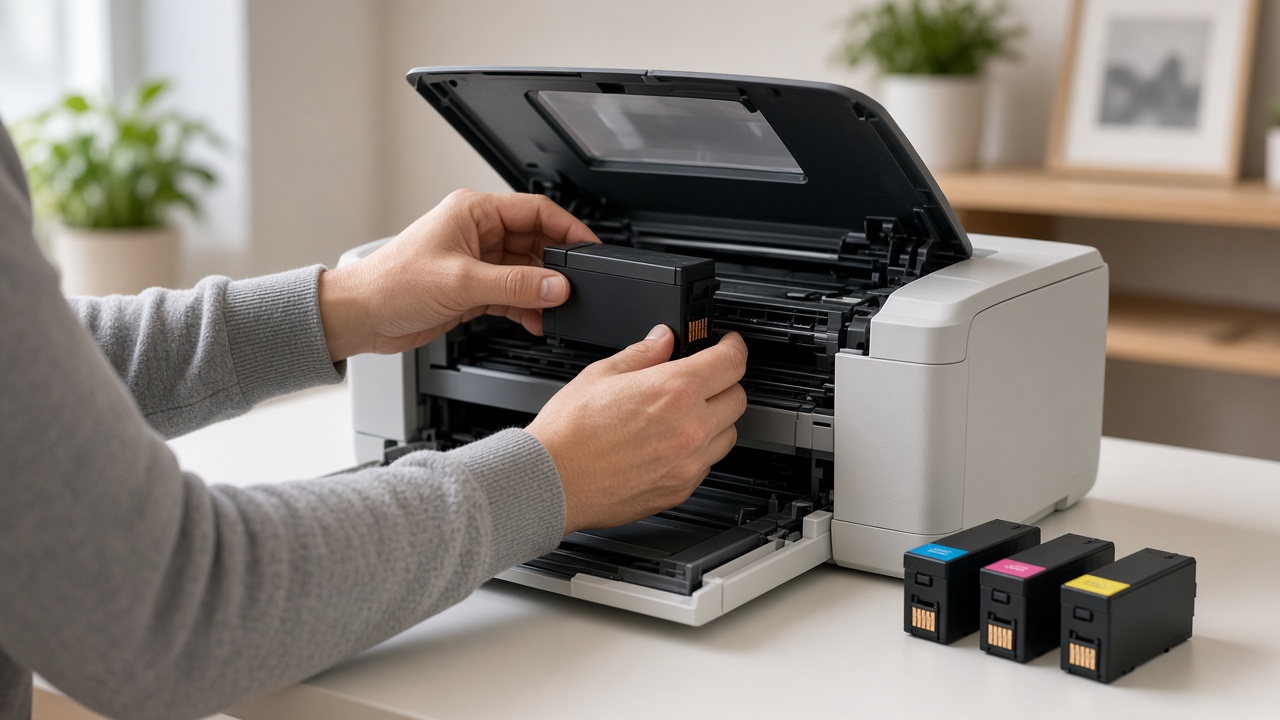
- Check if there's a plastic protective strip still on the cartridge (don't laugh, it happens constantly)
- Remove and reinstall the cartridge to reset the contacts
- Look for an "override" or "continue printing" option in the error message
- For third-party cartridges, you may need to reset the chip or tell the printer to ignore ink levels
- Print a test page to see if ink is actually flowing
4. Wireless Printer Randomly Disconnects
Your wireless printer worked fine for three months, and now it disconnects every 15 minutes like it's playing hard to get.
Why it happens: Wi-Fi interference, router issues, the printer switching between 2.4GHz and 5GHz bands, IP address conflicts, or the printer's power-saving mode is too aggressive.
- The real fix:
- Connect your printer to your router's 2.4GHz band specifically (more stable for printers)
- Assign your printer a static IP address
- Disable the printer's sleep/power-saving mode
- Move the printer closer to your router or add a Wi-Fi extender
- Update your printer's firmware (yes, printers get software updates)
5. Print Jobs Stuck in Queue Forever
You've sent 47 copies of the same document because nothing was printing, and now all 47 jobs are stuck in purgatory.
Why it happens: A corrupted print job crashed the queue, driver conflicts, or the print spooler service has frozen.
The real fix:
-
Open the print queue and cancel all documents
-
If that doesn't work, restart the print spooler service:
-
Press Windows + R, type "services.msc"
-
Find "Print Spooler"
-
Right-click and select "Restart"
-
Clear the spooler folder manually: delete everything in C:\Windows\System32\spool\PRINTERS
-
Restart your computer and printer
6. Prints Come Out Faded or Streaky
Your documents look like they were printed during a fog advisory.
Why it happens: Clogged print heads, low ink, incorrect print settings, or the printer hasn't been used in weeks and the ink dried up.
The real fix:
- Run the printer's cleaning cycle (usually found in printer settings or maintenance menu)
- Run it 2-3 times if needed, but wait between cycles
- Print a nozzle check pattern to identify which colors are clogged
- For stubborn clogs, remove cartridges and gently dab the print head with a damp cloth
- Check if you're in "draft" or "economy" mode and switch to normal quality
- If you rarely print, run a test page weekly to keep ink flowing
7. "PC Load Letter" and Other Cryptic Error Messages
Nothing strikes fear into the heart quite like an error message that requires a decoder ring to understand.
Why it happens: Printer manufacturers apparently hired cryptographers to write error messages. "PC Load Letter" means "put letter-sized paper in the paper cassette," but sure, let's make it sound like a nuclear launch code.
The real fix:
- Google the exact error message with your printer model
- Check the paper tray: is it empty? Is the paper the right size? Is the tray fully inserted?
- Look for your printer's error code list in the manual (or Google "your printer model error codes")
- Most cryptic messages are actually paper-related issues
8. Printer Prints Blank Pages
Your printer is doing a perfect impression of printing while producing completely blank pages. Very eco-friendly, printer. Thanks for wasting my paper.
Why it happens: Protective tape still on cartridges, clogged nozzles, empty cartridges despite what the ink level says, or incorrect driver settings.
The real fix:
- Remove cartridges and check for protective tape or seals
- Run a print head cleaning cycle
- Check if you accidentally selected "grayscale" or have contrast/brightness settings at zero
- Verify you're using the correct printer driver
- Try printing a test page directly from the printer (bypassing the computer)
9. Driver Issues and "Driver Unavailable"
Your computer suddenly forgot how to talk to your printer, even though they were best friends yesterday.
Why it happens: Windows updates, corrupted drivers, or your operating system decided to "helpfully" install a generic driver.
The real fix:
- Uninstall the current printer driver completely
- Download the latest driver from the manufacturer's website (not from sketchy driver download sites)
- Disconnect the printer before installing, then reconnect when prompted
- If Windows keeps auto-installing the wrong driver, disable automatic driver updates
- For older printers on Windows 11, you may need to run in compatibility mode
10. Two-Sided Printing Disasters
You selected duplex printing, and now half your document is upside down, backwards, or printed on the wrong side of the paper.
Why it happens: Different printers flip pages differently, and software doesn't always account for this correctly.
The real fix:
- Check your printer's properties for duplex settings (flip on long edge vs. short edge)
- Do a test print to figure out your printer's quirks
- Some documents need to be printed in reverse order for correct duplex printing
- Create a custom preset with your correct duplex settings
- When in doubt, print single-sided and manually flip
11. Printer Won't Grab Paper
Your printer is on a hunger strike, refusing to pick up paper from the tray.
Why it happens: Worn rollers, paper that's too thick or thin, humidity issues, or static electricity causing sheets to stick together.
The real fix:
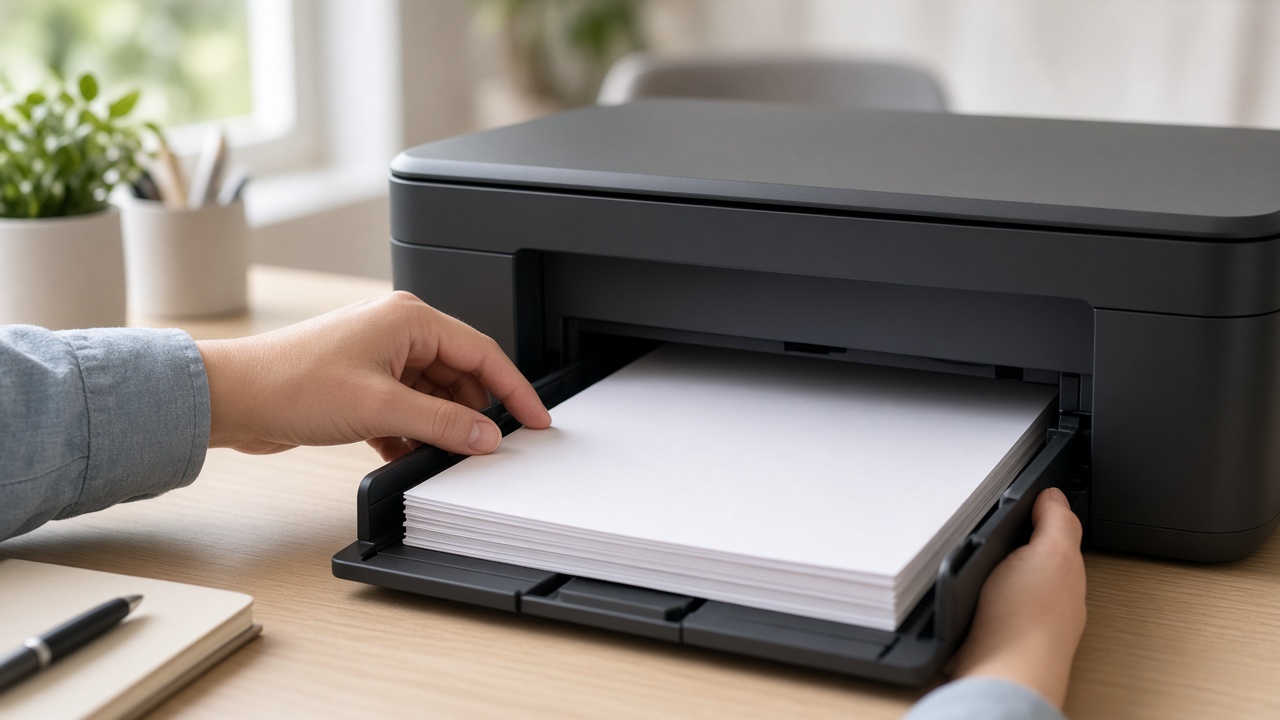
- Fan the paper before loading to separate sheets
- Don't overfill the tray (usually about 100-150 sheets max)
- Clean the rubber rollers with a slightly damp cloth
- Try different paper (some cheap paper is too slippery)
- Check that paper guides are snug against the stack but not too tight
- Replace rollers if they're worn smooth (cheap fix, huge impact)
12. Color Printing Issues
Everything prints in a weird magenta tint, or all your colors look like a 1970s photograph.
Why it happens: Color calibration is off, running low on specific color cartridges, print head alignment issues, or wrong color profile selected.
The real fix:
- Run the printer's color calibration utility
- Print a nozzle check to see which colors are missing
- Run cleaning cycles on specific color channels
- Check print settings: are you using the correct color profile for your paper type?
- Verify you're not in "grayscale" or "black ink only" mode
- Clean the print heads thoroughly
13. Smudged or Smeared Prints
Your documents look like they were sneezed on during printing.
Why it happens: Wet ink hasn't dried before being handled, dirty rollers, wrong paper type setting, or excess ink being applied.
The real fix:
- Let prints dry for 10-15 seconds before touching them
- Clean all the rollers inside the printer
- Make sure you've selected the correct paper type in settings (photo paper vs. regular paper uses different ink amounts)
- Check if you're in "high quality" mode which uses more ink
- For inkjet printers, use inkjet-specific paper
14. "Cannot Connect to Printer" on Network
Your networked printer worked yesterday, but today it might as well be on Mars.
Why it happens: IP address changed, network settings changed, firewall blocking communication, or the printer just decided to ghost everyone.
The real fix:
- Assign a static IP address to your printer (this solves 80% of network issues)
- Make sure printer and computer are on the same network
- Check if your firewall or antivirus is blocking printer communication
- Restart your router, printer, and computer in that order
- Re-add the printer using its IP address instead of auto-discovery
15. Print Quality Degrades Over Time
When you first got the printer, everything was crisp and beautiful. Now your prints look progressively worse, like the printer is slowly dying.
Why it happens: Accumulated dust, degraded rollers, dried ink buildup, or the printer is genuinely approaching end of life.
The real fix:
- Perform regular maintenance cleaning cycles
- Physically clean the interior with compressed air
- Replace maintenance kits if available for your model
- Check the page count (most printers have a lifespan of 15,000-50,000 pages)
- Accept that consumer printers typically last 3-5 years with regular use
The Nuclear Option: When to Just Buy a New Printer
Sometimes the printer has won. Here's when to surrender:
- Repair costs exceed 50% of a new printer's price
- Your printer is more than 5-7 years old
- You've replaced multiple major components
- The manufacturer no longer supports your model with drivers
- You're spending more on ink cartridges than the printer cost
- You're experiencing multiple different problems simultaneously
Modern printers under $200 often aren't worth repairing. It's frustrating but true.
Pro Tips to Prevent Future Printer Rage
Use your printer regularly. Printers that sit unused for weeks develop clogged print heads. Print a test page weekly if you don't print often.
Update firmware. Yes, printers get software updates that fix bugs. Check the manufacturer's website quarterly.
Use quality paper. Cheap paper causes jams, produces poor prints, and wears out rollers faster.
Clean monthly. A quick wipe-down of accessible parts prevents 90% of mechanical issues.
Turn it off properly. Don't just unplug it. Use the power button so the print head can park correctly.
Keep it level. Printers on wobbly surfaces or at angles develop feeding problems.
Consider ink tank printers. If you print frequently, tank-based printers (like Epson EcoTank or HP Smart Tank) cost more upfront but save thousands on ink.
The Truth About Printers
Here's what nobody tells you: printers are designed to be just barely good enough. They're complex mechanical devices sold at razor-thin profit margins, with manufacturers making money on ink, not hardware. This economic model means printers are built to a price point, not a quality standard.
That's why a $150 printer has 50 moving parts that all need to work perfectly in harmony. It's actually impressive they work at all.
Your printer doesn't hate you personally. It's just a temperamental machine that was designed by engineers who apparently never had to use one in real life. With the right knowledge, you can keep it working most of the time, and that's honestly the best we can hope for.
Now go forth and print with confidence. And when it inevitably breaks again, you'll know exactly what to do.
Frequently asked questions
Why does my printer only jam when I'm in a hurry?+
Murphy's Law applies especially to printers. But seriously, jams happen due to rushed paper loading, using wrinkled paper, overfilled trays, or worn rollers. The urgency just makes you notice it more.
Should I buy third-party ink cartridges or stick with brand name?+
Third-party ink can save 50-70% but may void warranties and sometimes cause errors. For important documents, use OEM. For everyday printing, quality third-party brands (like LD Products or E-Z Ink) usually work fine. Avoid the cheapest options.
How often should I replace my printer?+
Consumer inkjet printers typically last 3-5 years with regular use. Laser printers can last 5-10 years. Replace when repair costs exceed half the price of a new model or when driver support ends.
Why do printers need so many updates?+
Firmware updates fix bugs, improve compatibility with new operating systems, patch security vulnerabilities, and occasionally add features. Update quarterly or when experiencing issues.
Is it better to leave my printer on all the time or turn it off?+
Turn it off when not in use for extended periods, but use the power button (not unplugging) so the print heads park properly. For office environments with daily use, leaving it on is fine.
Why does my wireless printer keep disconnecting?+
Usually due to dynamic IP addresses changing. Assign your printer a static IP address in your router settings. Also ensure it's on the 2.4GHz band and disable aggressive power-saving modes.
Can I fix a paper jam by pulling the paper out forcefully?+
No! Pull gently in the direction of paper travel to avoid leaving torn pieces inside. Open all access doors and remove the paper carefully. Forcing it damages sensors and rollers.
Why is my printer printing slowly all of a sudden?+
Check if you're in "high quality" or "best" mode, whether you're printing double-sided, if print heads need cleaning, or if you're low on memory (for network printers). Also check for pending firmware updates.
What does "PC Load Letter" actually mean?+
It means "Paper Cassette: Load Letter-sized paper." It's asking you to put standard letter (8.5" x 11") paper in the main paper tray. This error became famous for being unnecessarily cryptic.
Are expensive printers actually better or just a scam?+
Price correlates with duty cycle (pages per month), build quality, and features. A $1,000 printer designed for 50,000 pages/month will outlast ten $100 printers. For home use under 500 pages/month, mid-range ($150-300) offers the best value.