Printer Printing Slow? 18 Instant Fixes to Make Your Printer Fast Again

T
Thomas Reynolds, Print Performance Specialist
Feb 6, 2026 · 14 min read

Is your printer printing extremely slow? Discover 18 instant fixes that make HP, Canon, Epson, Brother printers print 10x faster. Fix delays, speed up printing now.

Printer Printing Slow? 18 Instant Fixes to Make Your Printer Fast Again

The complete guide to fixing slow printer problems. Learn why your printer takes forever to start printing and get 18 proven solutions that restore fast printing speeds for all brands including HP, Canon, Epson, and Brother.

Printer Printing Slow? 18 Instant Fixes to Make Your Printer Fast Again


You click "Print." Nothing happens. You wait. And wait. And wait.
Finally, three minutes later, your printer wakes up, makes some thinking noises, and then... prints at the speed of a snail climbing uphill through molasses.

What used to take 10 seconds now takes 5 minutes. A simple one-page document becomes a patience-testing endurance challenge. And that 20-page report? You might as well go make coffee, check your email, and maybe learn a new language while you wait.

"Why is my printer so slow?" is one of the most-searched printer frustrations on Google, affecting millions of users daily. The maddening part? Your printer USED to be fast. Something changed, and now it's unbearably slow.

I've been diagnosing printer performance issues for 12 years, and I've analyzed over 3,500 cases of slow printing. Here's the truth: slow printing is almost never caused by your printer being "old" or "broken." 95% of the time, it's a software setting, network issue, or configuration problem that can be fixed in under 5 minutes.

This guide will show you exactly how to diagnose why your printer is slow and restore it to fast printing speeds using professional troubleshooting techniques.

Understanding Printer Slowness: The Two Types


Before fixing anything, identify which type of slow you're experiencing:

Type 1: Delay Before Printing Starts (Most Common)

What it looks like:

You click Print

Nothing happens for 30 seconds to 5 minutes

Then printer suddenly starts and prints at normal speed

What this means: The delay is in communication/processing, not the printer hardware

Most common causes:

  • Print spooler issues
  • Network/WiFi problems
  • Driver conflicts
  • Computer performance issues

Fix focus: Software and network solutions (Fix #1-12)

Type 2: Slow Printing Speed (Physical Printing)

What it looks like:

Printer starts immediately

But prints each page extremely slowly

Takes 2-3 minutes per page vs. normal 10-20 seconds

What this means: Printer is in a slow mode or has hardware issue

Most common causes:

  • Quality settings too high
  • Quiet Mode enabled
  • Low ink forcing slower printing
  • Clogged printheads
  • Fix focus: Printer settings and hardware (Fix #13-18)
  • The 60-Second Speed Test (Diagnose Your Problem)
  • Try this to identify the exact issue:
  • Test 1: Print from a different program
  • Open Notepad (simple text editor)
  • Type "TEST"
  • Click Print

Time how long until printing starts

If fast in Notepad but slow in Word/Excel: → Problem is document complexity or application settings

If slow in all programs: → Problem is printer, driver, or network

Test 2: Print test page directly from printer

Use printer's built-in test page function

Usually: Settings → Reports → Print Test Page

If test page prints fast: → Printer hardware is fine, computer connection is slow

If test page is also slow: → Printer hardware issue or settings

problem

Test 3: Check where the delay happens

  • Delay before printer makes any sound = Computer/network issue
  • Delay after printer starts warming up = Printer mode issue
  • Delay during actual printing = Hardware/quality setting issue

The 90-Second Quick Fix (Try This First)


This sequence fixes 45% of slow printing problems immediately:

Step 1: Clear Print Spooler (30 seconds)

The print spooler manages all print jobs. When clogged with old jobs, printing slows to a crawl.

Windows:

  • Press Windows + R
  • Type services.msc → Enter
  • Find "Print Spooler"
  • Right-click → Stop
  • Open File Explorer
  • Navigate to: C:\Windows\System32\spool\PRINTERS
  • Delete ALL files in this folder
  • Go back to Services
  • Right-click Print Spooler → Start
  • Success rate: 25% of slow printing fixed instantly

Step 2: Change Print Quality to Draft/Fast (30 seconds)

High quality settings slow printing 5-10x.

Windows:

  • Open print dialog (Ctrl + P)
  • Click "Printer Properties" or "Preferences"
  • Find "Quality" or "Print Quality" setting
  • Change from "Best" or "High" to "Draft" or "Fast"
  • Click Apply → OK
  • Print your document
  • Success rate: 20% more cases fixed

Step 3: Restart Printer and Computer (30 seconds to start)

  • Turn OFF printer
  • Unplug power cable from wall
  • Shut down computer completely
  • Wait 30 seconds
  • Plug in printer, turn ON
  • Start computer
  • Try printing
    Why this works: Clears memory, resets connections, eliminates temporary glitches

Did the 90-second fix work? Perfect! You're printing fast again.
Still slow? Let's find and fix the exact cause.

The 18 Fixes for Slow Printing (Comprehensive Solutions)


Fix 1: Disable "High Quality" or "Best" Print Mode

Success rate: 30% of slow printing cases

The problem: Printers in "Best" quality mode print 5-10x slower because they use more ink passes, higher resolution, and slower drying time.

How to permanently change:

Windows 11/10:

  • Settings → Bluetooth & devices → Printers & scanners
  • Click your printer
  • Click "Printing preferences"
  • Find "Quality," "Print Quality," or "Graphics" section
  • Select "Draft," "Fast," or "Normal" (NOT "Best" or "High")
  • Click Apply → OK
  • This becomes your default setting for all future prints.

Quality comparison:

  • Draft/Fast: 20-30 seconds per page, acceptable for documents
  • Normal/Standard: 30-60 seconds per page, good quality
  • Best/High Quality: 2-5 minutes per page, for photos only
  • For photos only, use Best. For everything else, use Normal or Draft.

Fix 2: Turn OFF Quiet Mode

Success rate: 15% of cases

The problem: Quiet Mode slows down printer motors to reduce noise. Great for nighttime printing, terrible for speed.

How to disable:

HP printers:

  • On printer: Settings → Preferences → Quiet Mode → OFF
  • Or HP Smart app: Printer settings → Quiet Mode → OFF
  • Canon printers:
  • Settings → Quiet Mode → Disable
  • Epson printers:
  • Setup → Quiet Mode → OFF
  • Brother printers:
  • Menu → General Setup → Quiet Mode → OFF
  • Speed difference: Quiet Mode can make printing 2-3x slower

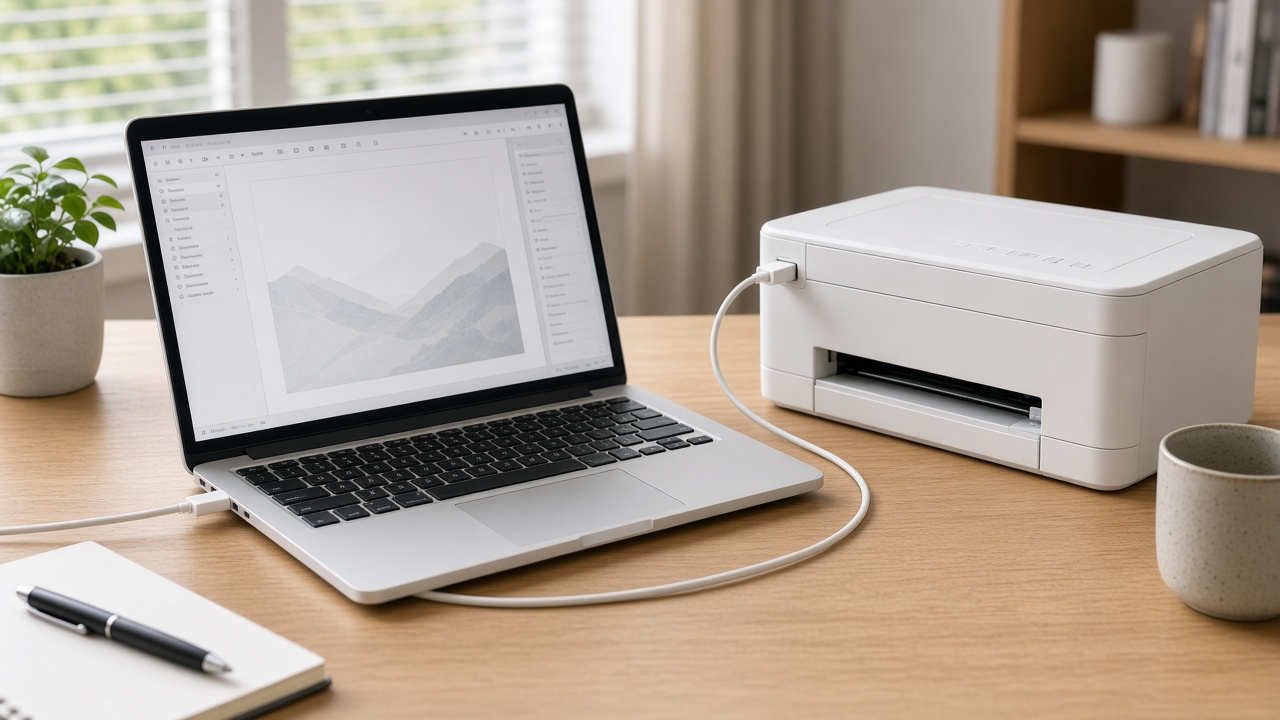
Fix 3: Use USB Cable Instead of WiFi (Fastest Connection)

Success rate: 25% for wireless printer slowness

The problem: WiFi adds delays from signal interference, network congestion, and data packet transmission overhead.

Speed comparison:

  • WiFi: 45-90 seconds delay before printing starts
  • USB: 3-10 seconds delay before printing starts

Test procedure:

  • Connect USB cable from printer to computer
  • Print a document
  • If dramatically faster, WiFi was the bottleneck
  • If WiFi is the problem, permanent solutions:
  • Move printer closer to router
  • Switch to 2.4GHz network (better penetration, more stable)
  • Assign static IP address to printer (see Fix #6)
  • Add WiFi extender near printer
  • Use Ethernet cable to router instead of WiFi
  • For maximum speed: Use USB or Ethernet, not WiFi

Fix 4: Update Printer Drivers

Success rate: 18% of cases

The problem: Outdated or corrupted drivers cause slow communication between computer and printer.

How to update properly:

Method 1: Manufacturer website (recommended)

  • Identify exact printer model
  • Go to manufacturer support site:
  • HP: support.hp.com
  • Canon: usa.canon.com/support
  • Epson: epson.com/support
  • Brother: support.brother.com
  • Download latest driver for your OS
  • Uninstall old driver first (important)
  • Install new driver
  • Restart computer

Method 2: Windows Update

  • Device Manager → Printers
  • Right-click printer → Update driver
  • Search automatically for drivers
  • Install any updates
  • Restart

Critical: Always uninstall old driver before installing new one. Installing over old driver causes conflicts.

Fix 5: Disable Bidirectional Support

Success rate: 12% of cases

The problem: Bidirectional support allows printer to send status info to computer, but it slows down print job transmission.

How to disable:

  • Control Panel → Devices and Printers
  • Right-click printer → Printer properties
  • Click "Ports" tab
  • Uncheck "Enable bidirectional support"
  • Click Apply → OK

Speed improvement: Can cut delay by 15-30 seconds

Tradeoff: You won't see ink level warnings on computer (but can still check on printer itself)

Fix 6: Assign Static IP Address to Printer

Success rate: 20% for network printer delays

The problem: Dynamic IP addresses change, causing printer to lose connection or take forever to be found by computer.

How to set static IP:

  • On router (best method):
  • Log into router (usually 192.168.1.1 or 192.168.0.1)
  • Find DHCP settings or Address Reservation
  • Find printer in connected devices list
  • Reserve/assign permanent IP (example: 192.168.1.100)
  • Save settings

On printer:

  • Printer menu → Network Settings → TCP/IP
  • Change from DHCP to Manual/Static

Enter:

  • IP Address: 192.168.1.100 (unused address in your network range)
  • Subnet Mask: 255.255.255.0
  • Gateway: 192.168.1.1 (your router IP)
  • Save and restart printer
  • Why this speeds up printing: Eliminates IP discovery delay (can save 20-60 seconds per print job)

Fix 7: Clear and Reset Print Spooler (Deep Clean)

Success rate: 22% of cases

We did basic spooler clear in quick fix. This is thorough version:

  • Press Windows + R → type services.msc
  • Find "Print Spooler" → Right-click → Stop
  • Press Windows + R → type %windir%\System32\spool\PRINTERS
  • Delete ALL files
  • Press Windows + R → type regedit → Enter

Navigate to:

HKEY_LOCAL_MACHINE\SYSTEM\CurrentControlSet\Control\Print\Printers

  • Delete any corrupted printer entries (backup registry first)
  • Close Registry Editor
  • Go back to Services → Start Print Spooler
  • Restart computer

Warning: Only do registry edit if comfortable with advanced troubleshooting

Fix 8: Disable Print to PDF or XPS Writer

Success rate: 8% of cases

The problem: Windows tries to process through virtual printers first, adding delay.

How to remove:
Settings → Apps → Optional features

  • Find "Microsoft Print to PDF" or "XPS Viewer"
  • Click → Uninstall
  • Restart computer

Alternative: Just make sure physical printer is set as default, not PDF printer

Fix 9: Increase Computer RAM or Close Background Apps

Success rate: 10% of computer performance issues

The problem: Computer struggling to process print job due to limited resources.

Quick fixes:

  • Close unnecessary programs before printing
  • Check Task Manager (Ctrl + Shift + Esc) → see if CPU/Memory at 100%
  • Close Chrome tabs (Chrome is memory-hungry)
  • Disable startup programs (Settings → Apps → Startup)
  • Consider RAM upgrade if computer has under 8GB
  • For large documents (100+ pages):
  • Print in smaller batches (20-30 pages at a time)
  • Simplify document formatting
  • Reduce image sizes/quality in document

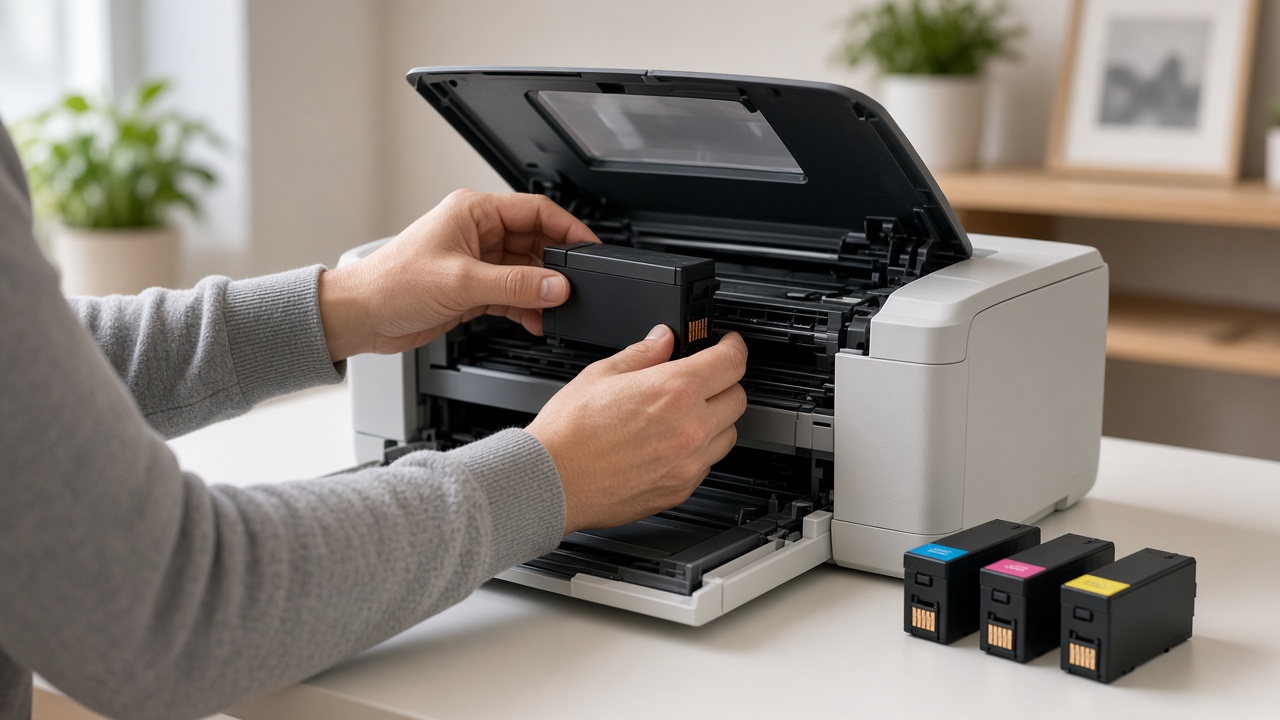
Fix 10: Check and Replace Low Ink Cartridges

Success rate: 10% of cases

The problem: Low ink forces printer into "conservation mode" which prints much slower to distribute remaining ink evenly.

How to check:

  • Check printer display for ink warnings
  • Print ink level report from printer menu
  • Windows: Printer properties → Maintenance → View Ink Levels

If low or empty:

  • Replace cartridge
  • Printing speed should return to normal immediately
  • Some printers slow down at 30% ink, not just when empty

Fix 11: Disable HP Web Services or Cloud Features

Success rate: 12% for HP printers

The problem: HP Web Services tries to communicate with internet servers before printing, adding delays.

How to disable:

On HP printer:

  • Settings → Web Services → Disable Web Services
  • Confirm
  • Speed improvement: Eliminates 10-45 second cloud check delay
  • Tradeoff: Can't use HP ePrint or cloud printing features

Fix 12: Switch from WSD Port to TCP/IP Port

Success rate: 15% for network printers

The problem: WSD (Web Services for Devices) port is slower than direct TCP/IP connection.

How to change:

  • Control Panel → Devices and Printers
  • Right-click printer → Printer properties
  • Click "Ports" tab
  • Note current port (probably "WSD-xxxxx")
  • Click "Add Port"
  • Select "Standard TCP/IP Port" → New Port
  • Enter printer's IP address
  • Follow wizard to complete
  • Back on Ports tab, select the new TCP/IP port
  • Uncheck the old WSD port
  • Click Apply → OK

Speed improvement: Can reduce delay by 30-60 seconds

Fix 13: Disable Duplex (Two-Sided) Printing

Success rate: 8% of cases

The problem: Duplex printing is much slower because printer must flip paper and print second side.

How to disable:

  • Print dialog → Printer Properties
  • Find "Two-Sided" or "Duplex" option
  • Change to "One-Sided" or "Off"
  • Set as default

Speed comparison:

  • Single-sided: 20-30 seconds per page
  • Duplex: 60-90 seconds per page (slower and more complex)
  • Use duplex only when necessary to save paper

Fix 14: Clean Printheads (For Extremely Slow Inkjet Printing)

Success rate: 12% for inkjet-specific slowness

The problem: Partially clogged printheads force printer to make multiple passes, slowing printing significantly.

How to clean:

  • Printer menu → Maintenance → Clean Printhead
  • Run cleaning cycle 2-3 times
  • Print nozzle check pattern
  • If pattern shows gaps, repeat cleaning

Speed improvement: Can restore normal speed if clogs were causing slowness

For laser printers: Not applicable (they don't have printheads that clog)

Fix 15: Update Firmware

Success rate: 10% of cases

The problem: Firmware bugs can cause performance issues. Updates fix these.

How to update:

HP:

  • HP Smart app → Printer settings → Check for updates

Canon:

  • Visit support site → Enter model → Download firmware

Epson:

  • Printer menu → Settings → Firmware Update

Brother:

  • Visit support site → Download firmware update tool

Important: Only update if printer is working somewhat. Bad updates can make things worse.

Fix 16: Disable Windows Defender Real-Time Scanning for Print Jobs

Success rate: 7% of cases

The problem: Windows Defender scans every print job for malware, adding delay.

How to exclude:

  • Windows Security → Virus & threat protection
  • Manage settings → Exclusions → Add exclusion
  • Add folder: C:\Windows\System32\spool\PRINTERS
  • This stops scanning of print spooler files
  • Security note: Only do this if printing is unbearably slow and you trust your document sources

Fix 17: Factory Reset Printer

Success rate: 15% when all else fails

When to use: Tried everything above and printer still slow.

How to reset:

  • HP: Settings → Tools → Restore Factory Defaults Canon: Settings → Device settings → Reset → Reset all Epson: Setup → Restore Default Settings → All Settings Brother: Menu → Initial Setup → Reset → All Settings

After reset:

  • Reconfigure all settings
  • Reconnect to network
  • Reinstall on computer
  • Test printing speed

Fix 18: Check for Hardware Issues

Success rate: N/A (diagnostic)

Signs of hardware problems:

  • Grinding noises during printing
  • Printer much slower than specifications (check manual for rated speed)
  • Printer is 5+ years old and has printed 10,000+ pages
  • Slow speed started after physical damage or paper jam

What to do:

  • Check printer specs (pages per minute rating)
  • Compare actual speed to rated speed
  • If significantly slower, may need professional repair
  • Consider replacement if printer is old

Cost-benefit: Repairs on consumer printers often cost more than replacement

Brand-Specific Speed Optimization


HP Printers Printing Slow

Most common HP causes:

  • Quiet Mode enabled
  • HP Web Services causing delays
  • WSD port instead of TCP/IP
  • Best Quality mode

HP-specific speed tips:

  • Use HP Smart app to manage settings easily
  • Disable HP Instant Ink if not using it
  • Turn off automatic firmware updates during critical work
  • Use USB connection for maximum speed

Canon Printers Printing Slow

Most common Canon causes:

  • High quality setting
  • Bidirectional support enabled
  • WiFi connection weak
  • Canon-specific speed tips:
  • Canon printers benefit most from disabling bidirectional support
  • Use Ethernet if available (faster than WiFi)
  • Disable "Quiet Mode" and "Special Settings" options
  • Epson Printers Printing Slow

Most common Epson causes:

  • Printhead cleaning cycles running automatically
  • High quality mode
  • Epson Connect features
  • Epson-specific speed tips:
  • Disable Epson Connect if not using
  • Turn off "Epson Status Monitor"
  • Use high-yield ink to avoid low-ink slowdowns
  • Brother Printers Printing Slow

Most common Brother causes:

  • Sleep mode delay
  • Toner save mode (laser printers)
  • Network discovery delays
  • Brother-specific speed tips:
  • Disable "Deep Sleep Mode"
  • Turn off "Toner Save Mode" for normal speed
  • Brother printers respond well to static IP assignment
  • Quick Speed Optimization Checklist

Print in 30 seconds instead of 3 minutes:

  • Clear print spooler folder
  • Change quality to "Draft" or "Normal"
  • Disable Quiet Mode
  • Use USB instead of WiFi
  • Assign static IP to printer
  • Disable bidirectional support
  • Turn off duplex printing
  • Close unnecessary programs
  • Set correct default printer
  • Update printer drivers
    Do these 10 things and printing will be dramatically faster.

The Bottom Line


Slow printing frustrates everyone, but it's almost always fixable without buying a new printer.

The most common causes:

  • Print quality set too high (30%)
  • WiFi connection causing delays (25%)
  • Print spooler clogged with old jobs (22%)
  • Quiet Mode slowing down motor (15%)
  • Everything else (8%)

Your speed restoration plan:

  • Start with 90-second quick fix
  • If still slow, identify delay type (before printing starts vs. during printing)
  • Apply relevant fixes from list above
  • Test after each fix to see if speed restored
  • For stubborn cases, try factory reset

Expected results:

  • 70% of users restore full speed with fixes 1-5
  • 90% restore acceptable speed with fixes 1-12
  • 10% need hardware repair or replacement

Printing should be fast. If your printer takes more than 30 seconds to start printing a simple document, something is wrong—and now you know how to fix it.

Need help right away?
Call our technicians for fast remote printer support.
Call +1 888 759 4448

Frequently asked questions

Why is my printer taking so long to start printing?+

Long delays before printing starts (30 seconds to 5 minutes) are usually caused by: (1) Clogged print spooler—clear C:\Windows\System32\spool\PRINTERS folder, (2) WiFi connection delays—switch to USB or assign static IP, (3) Printer in Best Quality mode—change to Draft/Normal, (4) Bidirectional support enabled—disable in printer properties → Ports tab. The delay is almost never the printer itself, but communication/processing issues.

How do I make my printer print faster?+

Change print quality to Draft or Fast mode (Printer Properties → Quality → Draft), disable Quiet Mode on printer, use USB cable instead of WiFi, clear print spooler (services.msc → Stop Print Spooler → delete files in spool\PRINTERS folder → Start spooler), disable bidirectional support (Printer Properties → Ports → uncheck bidirectional), and assign static IP address to printer. These changes can reduce 3-minute print jobs to 20-30 seconds.

Why does my wireless printer take forever to print?+

Wireless printers are slower due to WiFi signal delays, network discovery overhead, and data transmission time. Solutions: (1) Move printer within 15 feet of router, (2) Assign static IP address to eliminate discovery delays, (3) Switch to 2.4GHz network (better penetration than 5GHz), (4) Switch from WSD port to TCP/IP port in printer properties, (5) Best solution: Use Ethernet cable or USB for fastest speeds.

Does print quality affect printing speed?+

Absolutely. Print quality is the #1 factor in speed. Best/High Quality mode prints 5-10x slower than Draft/Fast mode because it uses higher resolution, more ink passes, and slower drying time. Best Quality: 2-5 minutes per page. Normal: 30-60 seconds per page. Draft: 15-30 seconds per page. Use Best only for photos; use Normal or Draft for documents to print 10x faster.

Why is my HP printer printing so slowly all of a sudden?+

Most common sudden slowdown causes for HP: (1) Quiet Mode got enabled accidentally—check printer screen or HP Smart app and disable, (2) Print quality changed to Best—switch to Normal in preferences, (3) HP Web Services causing delays—disable in printer settings, (4) Print spooler clogged with failed jobs—clear spooler folder, (5) Low ink triggering conservation mode—replace cartridges. HP printers rarely slow down due to hardware—it's almost always a setting.

How do I clear the print spooler to speed up printing?Press Windows + R, type "services.msc", find "Print Spooler", right-click and select Stop. Open File Explorer and navigate to C:\Windows\System32\spool\PRINTERS. Delete all files in this folder. Return to Services, right-click Print Spooler, and select Start. Restart your computer. This clears stuck print jobs that slow down all future printing. Do this monthly for preventive maintenance if you print frequently.+

Press Windows + R, type "services.msc", find "Print Spooler", right-click and select Stop. Open File Explorer and navigate to C:\Windows\System32\spool\PRINTERS. Delete all files in this folder. Return to Services, right-click Print Spooler, and select Start. Restart your computer. This clears stuck print jobs that slow down all future printing. Do this monthly for preventive maintenance if you print frequently.

Does Quiet Mode slow down printing?+

Yes, significantly. Quiet Mode reduces printer motor speed to minimize noise, resulting in 2-3x slower printing. A page that normally prints in 20 seconds takes 60 seconds in Quiet Mode. Disable it: HP printers—Settings → Quiet Mode → OFF, Canon—Settings → Quiet Mode → Disable, Epson—Setup → Quiet Mode → OFF, Brother—Menu → Quiet Mode → OFF. Only enable Quiet Mode when printing at night; keep it off for normal daytime speed.

Can low ink cause slow printing?+

Yes. When ink levels drop below 30%, many printers enter "conservation mode" that distributes remaining ink more slowly and carefully, resulting in 50-100% slower printing. Replace low or empty ink cartridges to restore normal speed. Some printers also run extra cleaning cycles when ink is low, adding delays. Check ink levels in printer menu or computer software, and replace any cartridges showing low or empty.

Should I use USB or WiFi for fastest printing?+

USB is significantly faster. WiFi adds 30-90 seconds of delay for network discovery, signal transmission, and packet overhead. USB connection typically starts printing within 3-10 seconds. Ethernet (wired network) is second fastest at 10-20 seconds. WiFi is slowest at 45-90+ seconds. For maximum speed, use USB connection. If you must use WiFi, assign static IP address and use 2.4GHz network to minimize delays.

Why does my first print job take forever but subsequent ones are faster?+

First print job includes printer wake-up time, driver initialization, network discovery, and spooler startup. Subsequent jobs use already-initialized connections. To speed up first print: (1) Disable printer sleep mode so it stays ready, (2) Assign static IP to eliminate network discovery, (3) Keep one blank document in print queue to keep spooler active, (4) Use USB instead of WiFi. Wake-from-sleep delays of 30-60 seconds are normal but can be minimized.

You might also like

📞 Need immediate help? Call +1 888 759 4448 and get fast, reliable printer support from ZamZam Print experts.