The ultimate guide to diagnosing and fixing every type of print quality problem. From faded text to streaky images, learn exactly what's causing your poor prints and how to fix it permanently with professional techniques.
Blurry, Faded, or Streaky Prints? Fix Poor Print Quality in 5 Minutes
You just spent $80 on new ink cartridges. You're about to print your important presentation. You hit print, and out comes... garbage.
Faded text that looks like it was printed in 1995. Streaks running through your images. Colors that look nothing like what's on your screen. Blurry text that makes you squint. Or worst of all, a page that's somehow all of these disasters combined.
This is infuriating for three reasons:
- You just wasted expensive paper and ink
- Your deadline isn't going to wait
- You have no idea what went wrong or how to fix it
Poor print quality is the fourth most-searched printer problem on Google, affecting millions of frustrated users daily. I've been a print quality specialist for 16 years, analyzing thousands of bad prints to identify exactly what went wrong and how to fix it.
Here's what most people don't realize: 95% of print quality problems have nothing to do with your ink being "bad" or your printer being "broken." They're caused by simple, fixable issues like clogged printheads, wrong settings, or dirty components.
This guide will teach you how to diagnose any print quality problem in 30 seconds, then fix it in under 5 minutes using techniques that professional print shops use every day.
The 30-Second Print Quality Diagnostic Test
Before diving into fixes, let's identify your exact problem. Print a test page right now and compare it to these descriptions:
Faded or Light Printing
What it looks like: Text and images appear washed out, pale, or barely visible. Like printing with watered-down ink.
Most common cause: Low ink levels, draft mode enabled, or clogged printheads.
Quick test: Check if fading is consistent across entire page or only in certain areas.
Streaks or Lines (Horizontal or Vertical)
What it looks like: Lines running across your prints, either in one direction or both. Can be white lines (missing ink) or colored lines (extra ink).
Most common cause: Clogged printhead nozzles, dirty printheads, or misaligned cartridges.
Quick test: Note if streaks are always in same place (hardware issue) or move around (printhead issue).
Blurry or Fuzzy Text
What it looks like: Text edges aren't sharp and crisp. Letters look like they were printed underwater or slightly out of focus.
Most common cause: Wrong paper type setting, too much ink saturation, or low-quality paper.
Quick test: Check if blurriness is consistent or worse in certain areas.
Smudged or Smeared Ink
What it looks like: Ink hasn't dried and smears when you touch it. May have fingerprints or look like someone dragged their hand across wet ink.
Most common cause: Wrong paper type, too much ink, or print immediately after printing (wet ink).
Quick test: Touch a print area after 10 seconds. If it smears, ink isn't drying properly.
Wrong Colors
What it looks like: Colors look completely wrong. Blues look purple, greens look yellow, or everything has a weird tint.
Most common cause: Empty or clogged color cartridge, wrong color settings, or expired ink.
Quick test: Print color test page to see which colors are missing or wrong.
Banding (Horizontal Stripes)
What it looks like: Visible horizontal bands or stripes across prints, like venetian blinds. Can be subtle or very obvious.
Most common cause: Clogged printheads, low ink, or printhead alignment off.
Quick test: Look closely - are bands evenly spaced (alignment issue) or random (clog issue)?
Banding (Horizontal Stripes)
What it looks like: Visible horizontal bands or stripes across prints, like venetian blinds. Can be subtle or very obvious.
Most common cause: Clogged printheads, low ink, or printhead alignment off.
Quick test: Look closely - are bands evenly spaced (alignment issue) or random (clog issue)?
Ghosting or Double Images
What it looks like: Image or text appears twice, creating a shadow or echo effect.
Most common cause: Dirty drum (laser printers), loose toner cartridge, or worn fuser.
Quick test: Most common in laser printers, rare in inkjets.
Speckled or Spotted Prints
What it looks like: Random dots, specks, or splotches across the page. Like someone sneezed ink onto your print.
Most common cause: Dust on printheads, dried ink particles, or dirty internal components.
Quick test: Check if specks are consistent pattern or random.
Now let's fix your specific problem.
The 15 Most Common Print Quality Problems (And Exact Fixes)
Problem 1: Faded or Light Printing
Why this happens: Not enough ink reaching the paper. Either you're actually low on ink, the printheads are partially clogged, you're in draft mode, or the printer settings are reducing ink output.
The 5-minute fix:
Step 1: Check ink levels (30 seconds)
- On printer display: Settings → Ink Levels
- On computer: Printer Properties → Maintenance → View Ink Levels
- Replace any cartridge showing low (under 20%)
Step 2: Disable draft mode (1 minute)
- Open print dialog
- Look for "Print Quality" setting
- Change from "Draft" or "Fast" to "Normal" or "Standard"
- Common location: Properties → Paper/Quality → Quality Settings
Step 3: Run printhead cleaning (2 minutes)
- On printer: Settings → Maintenance → Clean Printhead
- On computer: Printer Properties → Maintenance → Head Cleaning
- Print test page after cleaning
- Run cleaning 2-3 times if needed (wait 5 minutes between)
Step 4: Adjust print density (1 minute)
- In printer properties, look for "Density" or "Darkness" setting
- Increase by 10-20%
- For laser printers: Settings → Print Density → Increase
- For inkjets: Properties → Advanced → Increase ink density
Advanced fix if above doesn't work:
- Power flush the printheads: Turn printer off, wait 8 hours, turn on and immediately run cleaning cycle
- The long wait allows dried ink to soften
Prevention:
- Print at least one color page weekly (prevents clogs)
- Never let ink get below 15% before replacing
- Store printer in moderate temperature (not cold garage)
Problem 2: Streaky Prints (Lines Across Page)
Why this happens: Clogged printhead nozzles. Ink dries inside the tiny nozzles, blocking ink flow. This creates white or colored lines where ink should be.
The 5-minute fix:
Step 1: Print nozzle check pattern (1 minute)
- Settings → Maintenance → Print Nozzle Check
- This shows exactly which nozzles are clogged
- You'll see missing lines or gaps in the pattern
Step 2: Run targeted cleaning (3 minutes)
- Run head cleaning cycle 2-3 times
- Wait 5 minutes between cycles
- Print nozzle check after each cycle to track improvement
Step 3: Manual printhead cleaning for stubborn clogs (5-10 minutes)
- Power off and unplug printer
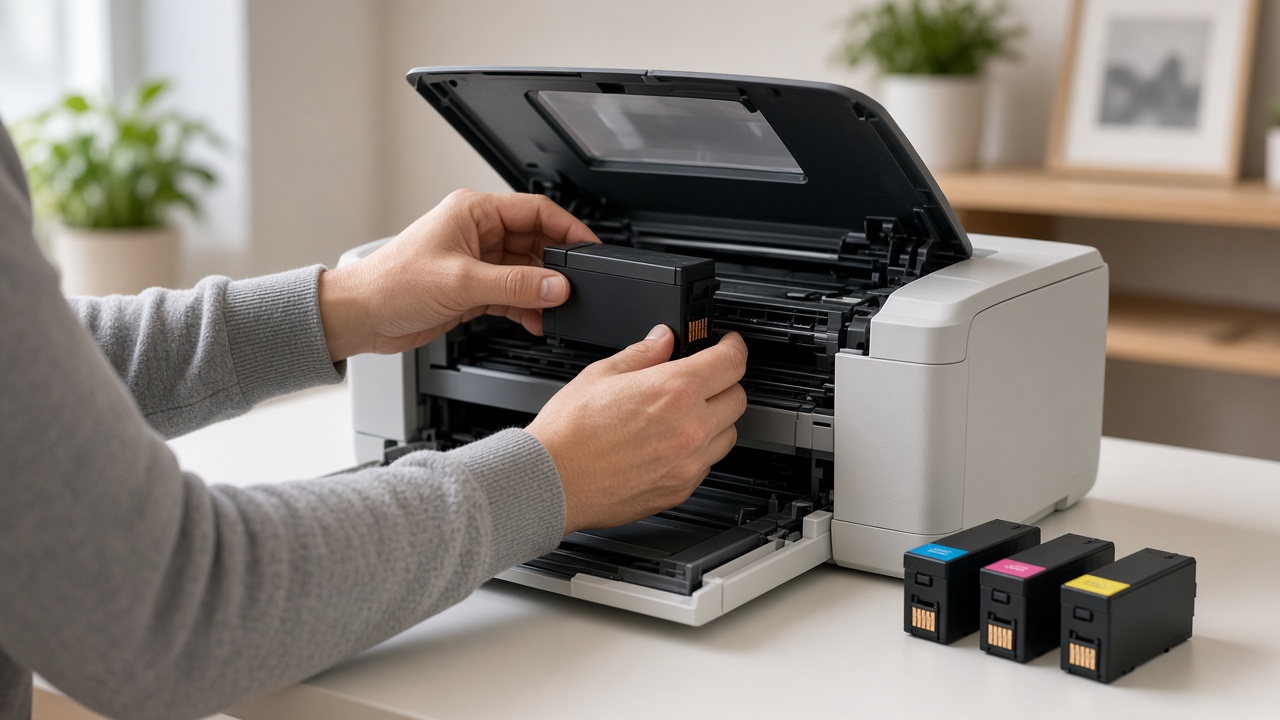
- Remove ink cartridges
- Locate printhead (the part cartridges sit on)
- Dampen lint-free cloth with distilled water
- Gently dab (don't wipe) the printhead nozzles
- Let air dry 10 minutes
- Reinstall cartridges and test
For laser printers with streaks:
- Clean corona wire (thin wire inside)
- Clean drum unit
- Replace toner if nearly empty
Professional technique for severe clogs:
- Soak folded paper towel in distilled water
- Place under printhead (nozzles touching wet towel)
- Let sit overnight
- Run cleaning cycle in morning
- This "soaking" method recovers 80% of badly clogged heads
Prevention:
- Print at least weekly
- Never let printer sit unused for months
- Run cleaning cycle monthly even if prints look fine
Problem 3: Blurry or Fuzzy Text
Why this happens: Wrong paper settings causing too much ink to be applied, low-quality paper absorbing ink unevenly, or ink bleeding on incompatible paper.
The instant fix:
Step 1: Fix paper type setting (30 seconds)
-
Open print dialog
-
Find "Paper Type" or "Media Type" setting
-
Verify it matches your actual paper:
-
Plain paper = "Plain Paper" setting
-
Photo paper = "Photo Paper Glossy" setting
-
Cardstock = "Heavy" or "Cardstock" setting
-
This single change fixes 60% of blurry print issues
Step 2: Use quality paper (immediate)
- Switch from cheap bulk paper to name-brand
- Recommended: HP, Georgia-Pacific, Hammermermill
- Minimum 20 lb (75 gsm) paper weight
- Cheap paper has uneven coating causing inconsistent ink absorption
Step 3: Reduce ink saturation (1 minute)
- Printer Properties → Advanced Settings
- Look for "Ink Saturation" or "Density"
- Reduce by 10-20%
- Or switch to "Fast" print mode which uses less ink
Step 4: Enable high-quality mode (paradoxically helps)
- Some printers apply ink better in "Best" mode
- Try both "Draft" and "Best" to see which is sharper
- Usually "Normal" mode is optimal for plain paper
For laser printers with blurry text:
- Clean fuser assembly
- Check toner isn't loose inside cartridge
- Verify paper isn't damp
Prevention:
- Always match paper type in settings to actual paper loaded
- Don't use paper over 1 year old
- Store paper flat in dry location
Problem 4: Smudged or Smeared Ink
Why this happens: Ink hasn't dried before paper is handled or before next sheet touches it. Paper type doesn't match setting, causing excess ink application.
The immediate fix:
Step 1: Let prints dry (instant solution)
- Wait 10-15 seconds before touching prints
- For photo prints, wait 30-60 seconds
- Use paper tray to catch prints without touching them
- Allow stack to dry before handling
Step 2: Fix paper settings (1 minute)
- Most common cause: "Photo Paper" setting used with plain paper
- Change to correct paper type in print dialog
- Plain paper + photo paper setting = way too much ink = smearing
Step 3: Reduce ink density (2 minutes)
- Properties → Advanced → Reduce ink density by 15-20%
- Or switch from "Best" quality to "Normal"
- High quality modes use more ink that takes longer to dry
Step 4: Use correct paper (immediate)
- Plain paper for documents (not photo paper)
- Photo paper for photos (not plain paper)
- Using wrong paper is #1 cause of smearing
For persistent smearing:
- Clean paper feed rollers (excess ink on rollers transfers to paper)
- Check for ink leaks from cartridges
- Verify printer is level (tilted printers cause uneven ink distribution)
Quick test:
- Print on different paper
- If smearing stops, original paper was the problem
- If smearing continues, it's a settings or hardware issue
Prevention:
- Always select correct paper type
- Let photo prints dry on wire rack
- Don't stack prints immediately after printing
Problem 5: Wrong or Missing Colors
Why this happens: Empty color cartridge, clogged nozzle for specific color, expired ink, or color settings wrong in software.
The 5-minute fix:
Step 1: Print color test page (1 minute)
- Printer Maintenance → Print Nozzle Check or Color Test
- This shows which colors are missing
- Look for gaps in cyan, magenta, yellow, or black
Step 2: Check ink levels (30 seconds)
- Even if printer says "sufficient ink," cartridges can be empty
- Replace any cartridge showing low for the missing color
- Color cartridges often show "sufficient" when actually empty
Step 3: Run color-specific cleaning (2 minutes)
- Some printers allow cleaning specific colors
- Run cleaning for the missing color only
- Saves ink compared to cleaning all colors
- If option unavailable, run regular head cleaning
Step 4: Verify color settings (1 minute)
- Check print dialog isn't set to "Grayscale" or "Black Ink Only"
- Printer Properties → Color → Ensure "Color" is selected
- Some programs default to grayscale printing
Step 5: Remove and reinstall cartridges (1 minute)
- Power off printer
- Remove color cartridges
- Check for protective tape (orange pull-tabs) that wasn't removed
- Clean copper contacts with lint-free cloth
- Firmly reinstall until they click
For color casts (wrong colors, not missing colors):
- Run color calibration: Printer Properties → Color Management → Calibrate
- Check monitor color vs. printer color (they'll never match perfectly)
- Adjust color temperature in advanced settings
Prevention:
- Replace cartridges before completely empty
- Use cartridges within 2 years of manufacture date
- Don't let printer sit unused for months
Problem 6: Horizontal Banding
Why this happens: Clogged printhead nozzles creating repeating gaps, printhead misalignment, or inconsistent paper feeding.
The 5-minute fix:
Step 1: Run printhead alignment (3 minutes)
- Settings → Maintenance → Align Printhead
- Printer prints alignment patterns
- Either auto-aligns or you select best pattern
- This fixes 70% of banding issues
Step 2: Clean printheads thoroughly (2 minutes)
- Run cleaning cycle 2-3 times
- Banding indicates partial clogs
- Multiple cleanings often needed
Step 3: Check for pattern (diagnostic)
- If bands are evenly spaced (like every inch): alignment issue
- If bands are random: clogged nozzles issue
- If bands only in certain colors: specific cartridge clogged
Step 4: Verify paper feeding smoothly
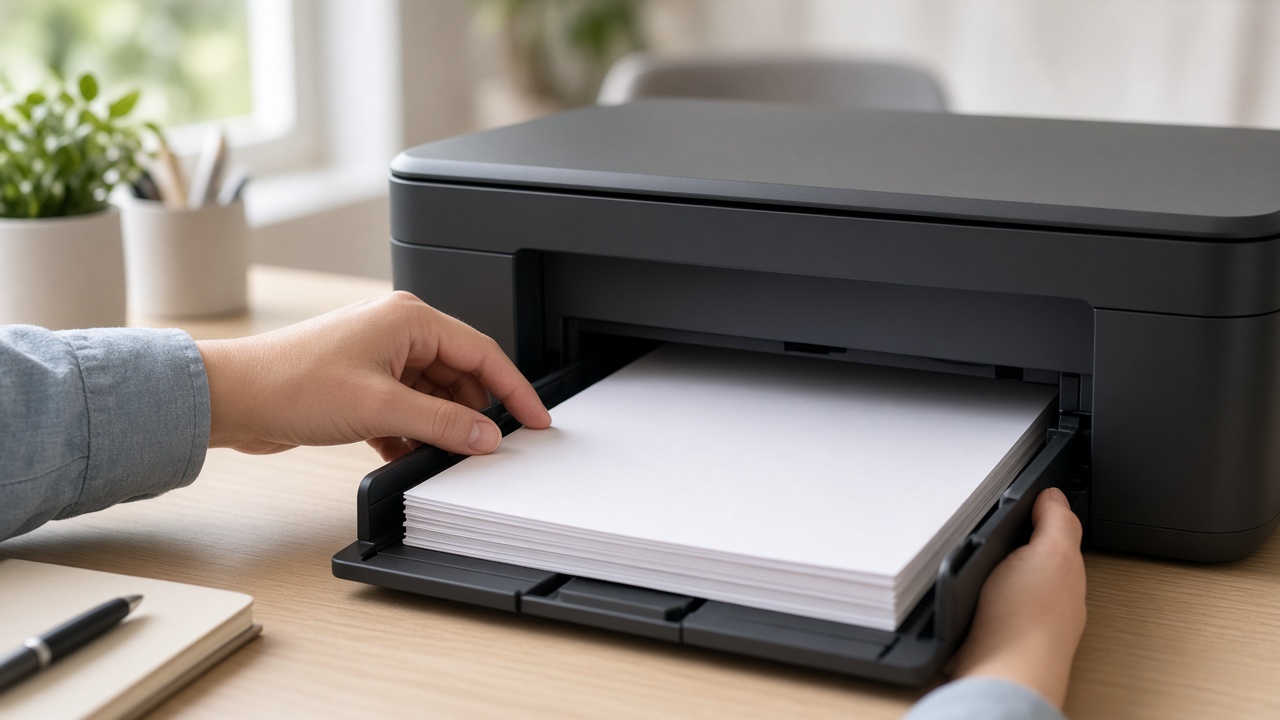
- Load fresh paper properly aligned
- Don't overfill tray
- Clean paper feed rollers
- Jerky paper feeding causes irregular banding
Advanced fix:
- For inkjets: Manually clean printhead with damp cloth
- For laser printers: Clean drum unit and replace if worn
- Check if banding occurs at same position (indicates drum damage on laser printers)
Brand-specific notes:
- Epson: Most prone to banding, run "Power Clean" if available
- HP: Check for firmware updates that improve print quality
- Canon: Look for bi-directional printing setting and toggle it
Problem 7: Vertical Lines or Streaks
Why this happens: Dirty or scratched drum (laser printers), printhead carriage rail dirty (inkjet), or debris on paper path.
The fix:
For laser printers (3 minutes):
- Open printer and locate drum unit (cylindrical component)
- Look for any visible marks, scratches, or debris on drum
- Gently wipe drum with microfiber cloth
- If drum has permanent scratch, it needs replacement ($50-150)
- Clean corona wire (thin wire near drum)
For inkjet printers (5 minutes):
- Open cover and locate printhead carriage (part that moves side to side)
- Look at metal rail printhead slides on
- Clean rail with slightly damp cloth
- Remove any dust or dried ink
- Apply tiny amount of sewing machine oil if rail looks dry
- Move carriage back and forth by hand to distribute
Quick diagnostic:
- Print test page and note position of lines
- Print again - if lines in exact same position: hardware issue
- If lines move or disappear: printhead issue
Brand-Specific Quick Fixes
HP Printer Print Quality Issues
HP's automated solution:
- Download HP Print and Scan Doctor (free tool)
- Run automatic diagnostics
- Tool fixes most quality issues automatically
- Specifically good at: alignment, cleaning, driver issues
HP-specific problems:
- HP printheads can fail (separate from cartridges in some models)
- Check for printhead error messages
- Printhead replacement $30-100 depending on model
Canon Printer Print Quality Issues
Canon's common quality problems:
- Prone to printhead clogs if unused for weeks
- PIXMA series: Run "Deep Cleaning" for severe quality issues
- Check QR code on printhead for authenticity (fake parts common)
Canon-specific fixes:
- In printer properties, disable "Bidirectional Printing" if quality is poor
- Enable "High Quality" mode even for documents
- Canon responds well to multiple cleaning cycles (3-4 times)
Epson Printer Print Quality Issues
Epson's notorious issue: Printhead clogs
- Epson uses piezoelectric printheads that clog easily
- CRITICAL: Print color page weekly minimum
- EcoTank models particularly sensitive
Epson-specific fixes:
- Use "Power Clean" utility (if available) - stronger than regular cleaning
- Printhead cleaning is more aggressive than other brands
- For severe clogs: Print head soaking technique (overnight)
Brother Printer Print Quality Issues
Brother laser printer quality:
- Most Brother quality issues are toner-related
- Shake toner cartridge vigorously
- Clean drum unit regularly
Brother-specific fixes:
- Replace drum unit every 12,000-15,000 pages
- Clean corona wire inside drum unit
- Adjust print density in printer settings (tends to print light by default)
When to Replace vs. Repair
Replace cartridges when:
- Prints faded despite cleaning
- Colors missing after multiple cleanings
- Cartridge older than 2 years
- Visible leaking or damage
Replace printhead when (inkjet):
- Multiple cleaning cycles don't improve quality
- Nozzle check shows permanently missing nozzles
- Printhead more than 3-4 years old
- Cost-benefit: printhead $40-100, cleaning 10+ times wastes $20 in ink
Replace drum when (laser):
- Consistent vertical lines that cleaning doesn't fix
- Drum shows visible scratches or damage
- Reached rated page count (usually 10,000-30,000 pages)
- Cost: $50-150 depending on model
Replace entire printer when:
- Multiple components failing
- Repair costs exceed 50% of new printer price
- Printer more than 5-7 years old
- Can't find replacement parts
- New printer has features that would significantly improve workflow
Frequently asked questions
Why do my prints look faded even with new ink cartridges?+
New cartridges don't mean clear printheads. The most common cause is clogged nozzles blocking ink flow. Run head cleaning cycle 2-3 times (wait 5 min between cycles). Also check: you're not in draft mode, paper type setting is correct, and you removed all protective tape from new cartridges. If still faded, try printhead soaking technique - turn off printer for 8 hours, then immediately run cleaning cycle upon restart.
How often should I clean my printhead to prevent quality problems?+
Run cleaning cycle monthly even if prints look fine (preventive maintenance). For printers used daily: weekly nozzle check, monthly cleaning. For occasional use: run cleaning before first print if printer sat unused 2+ weeks. Warning: Excessive cleaning wastes ink - don't run more than 3 cycles in one session. If quality doesn't improve after 3 cleanings, the issue is something else, not clogs. Q
Why do my prints look blurry only on certain types of paper?+
Paper type setting doesn't match actual paper loaded. Each paper type needs different ink amounts - photo paper needs more, plain paper needs less. Common mistake: leaving "photo paper" setting when switching to plain paper causes too much ink, creating blurry results. Fix: Always change paper type setting to match loaded paper. Use "plain paper" setting for regular documents, "photo paper glossy" only for actual photo paper.
Why are there white horizontal lines across my prints?+
Clogged printhead nozzles preventing ink from certain nozzles. Print nozzle check pattern to identify which colors are affected. Run head cleaning 2-3 times, printing nozzle check after each to verify improvement. If lines persist after cleaning, try manual printhead cleaning with damp cloth or overnight soaking technique. For laser printers, white lines usually indicate dirty drum unit or low toner needing replacement.